
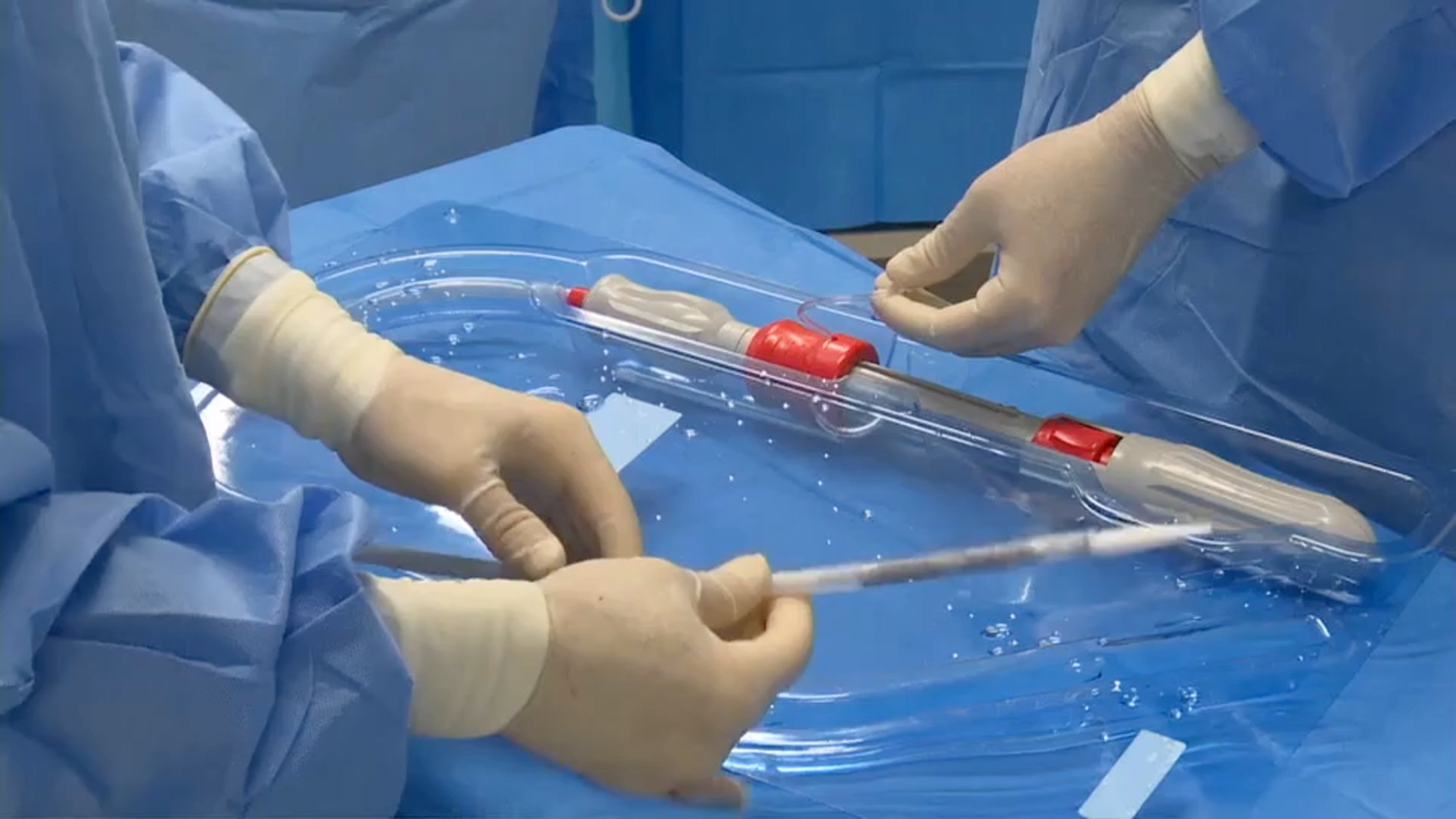
The tricuspid valve and the role of Right Heart Failure (RHF) on tricuspid regurgitation are finally receiving focused attention. For many patients, innovation means access to treatment where none existed before. With advances like P&F’s TricValve® Transcatheter Bicaval Valves System, right-sided heart care is being reshaped through minimally invasive valve therapy.
The Evolution of Tricuspid Regurgitation Treatment
The tricuspid valve has long been considered the “forgotten valve,” leading to tricuspid regurgitation and other right-sided heart conditions being historically underdiagnosed and undertreated compared to left-sided valvular diseases. For decades, limited awareness, subtle symptoms, and a lack of treatment options have left patients with right-sided heart issues neglected.
However, over the past five years, growing recognition of tricuspid regurgitation’s morbidity and mortality has made it a major focus in cardiology. This shift has catalyzed a transformation in the treatment options for tricuspid regurgitation.
From mere medical management to proactive surgical intervention to the rapidly advancing transcatheter era, offering less-invasive, patient-centered solutions for those previously deemed inoperable.
The Unmet Need in Severe TR
Despite the increasing acknowledgment of tricuspid regurgitation, severe cases continue to be an unmet need in cardiovascular care. Tricuspid valve regurgitation treatment options are even more limited for elderly and comorbid patients who are not good candidates for approved transcatheter devices and surgical approaches. Additionally, medical therapies are palliative, serving to alleviate symptoms rather than curing the underlying valve dysfunction.
Consequently, many patients go untreated, which can lead to right-sided heart failure, systemic congestion, and a profound decline in quality of life.
The Shift to Transcatheter Tricuspid Therapies
With many traditional approaches being insufficient for high-risk patients, the rise of transcatheter tricuspid therapies has come, reflecting a broader wave of structural heart innovation. The current landscape includes the following transcatheter tricuspid therapies:
Transcatheter Edge-to-Edge Repair (T-TEER)
T-TEER is a highly effective, minimally invasive valve therapy procedure that repairs leaky heart valves without open-heart surgery. It often allows for quick recovery, with patients home within 1-2 days.
Transcatheter Tricuspid Valve Replacement (TTVR)
Similar to T-TEER, TTVR is a minimally invasive, catheter-based treatment option for tricuspid regurgitation that replaces the damaged valve. It is another lower-risk and quicker recovery option for patients considered high-risk for conventional open-heart surgery.
Transcatheter Annuloplasty Systems
Annuloplasty systems use specialized catheters to repair heart valves by mimicking surgical tightening. This helps reduce valve circumference, preventing regurgitation.
Although these minimally invasive valve therapy options are highly effective, the key limitation is that they are not suitable for all anatomies. This is exactly why alternative approaches, such as Caval Valve Implantation (CAVI), are necessary.
P&F’s Innovation: TricValve®
Caval Valve Implantation (CAVI) offers a fundamentally different approach than other transcatheter tricuspid therapies. Rather than repairing or replacing the native tricuspid valve, CAVI involves placing bioprosthetic valves in the vena cavae to reduce backflow and venous congestion caused by tricuspid regurgitation.
One of the key advantages of this minimally invasive valve therapy is its ability to treat symptoms even when the native valve cannot be repaired or replaced. It’s much better suited to complex anatomies, opening treatment options for patients with challenging anatomy.
A leading example of this structural heart innovation is the TricValve® system, which employs a dual-valve design implanted in both the superior and inferior vena cavae. Specifically designed for venous anatomy, TricValve® exemplifies how CAVI can expand the treatment landscape for patients previously considered untreatable.
Device Evolution & Engineering Insights
Tricuspid regurgitation treatment has evolved significantly over the past decade. Use of repurposed left-heart devices is now a thing of the past, as purpose-built solutions tailored to the unique needs of the tricuspid valve are now available.
Within this evolution, P&F has played a vital role by advancing anatomically tailored designs that account for the complexities of unique hearts. A focus on durability and precise positioning has been reinforced through iterative improvements informed by real-world clinical feedback. These contributions are precisely why P&F’s TricValve® system is a leading example.
Central to P&F’s process is the close collaboration between engineers and physicians to ensure that each iteration of minimally invasive valve therapy is both technically refined and clinically practical for patients.
Clinical Experience & Real-World Impact
Emerging clinical data continue to support TricValve® as a crucial treatment option for tricuspid valve regurgitation. Research and clinical trials demonstrate meaningful symptom relief, including reductions in venous congestion, as well as improvements in functional status and overall quality of life for patients with tricuspid regurgitation.
Alongside greater experience with transcatheter tricuspid therapy, CAVI is seeing growing adoption in select markets, reflecting increasing confidence among clinicians. Its role is especially critical for patients with limited alternatives, offering a feasible, minimally invasive valve therapy option.
The Future of Tricuspid Intervention
The future of tricuspid regurgitation treatment is rapidly evolving, with expanding opportunities to benefit a broader patient population and to focus on earlier intervention strategies. These therapies are increasingly integrated into heart team decision-making, ensuring a multidisciplinary approach balances procedural risk with potential patient benefit.
Additionally, more research is underway on potential combination therapies to optimize patient outcomes. As ongoing clinical trials and the innovation pipeline continue to drive this evolution, the development of safer, more effective tricuspid regurgitation treatment solutions is furthered.
The tricuspid valve is no longer the “forgotten valve.” Advancements in structural heart innovation are rapidly expanding treatment options, offering new hope to high-risk patients. Through pioneering the TricValve® system, P&F is helping to lead the next wave of right-sided heart care.
Learn more about the TricValve® system.
CAUTION: The TricValve system is limited by U.S. Federal Law to investigational use. TricValve is MDR CE marked and registered with ANVISA.