
First TricValve® Case in the Philippines Demonstrates Promising Outcomes for Severe Tricuspid Regurgitation
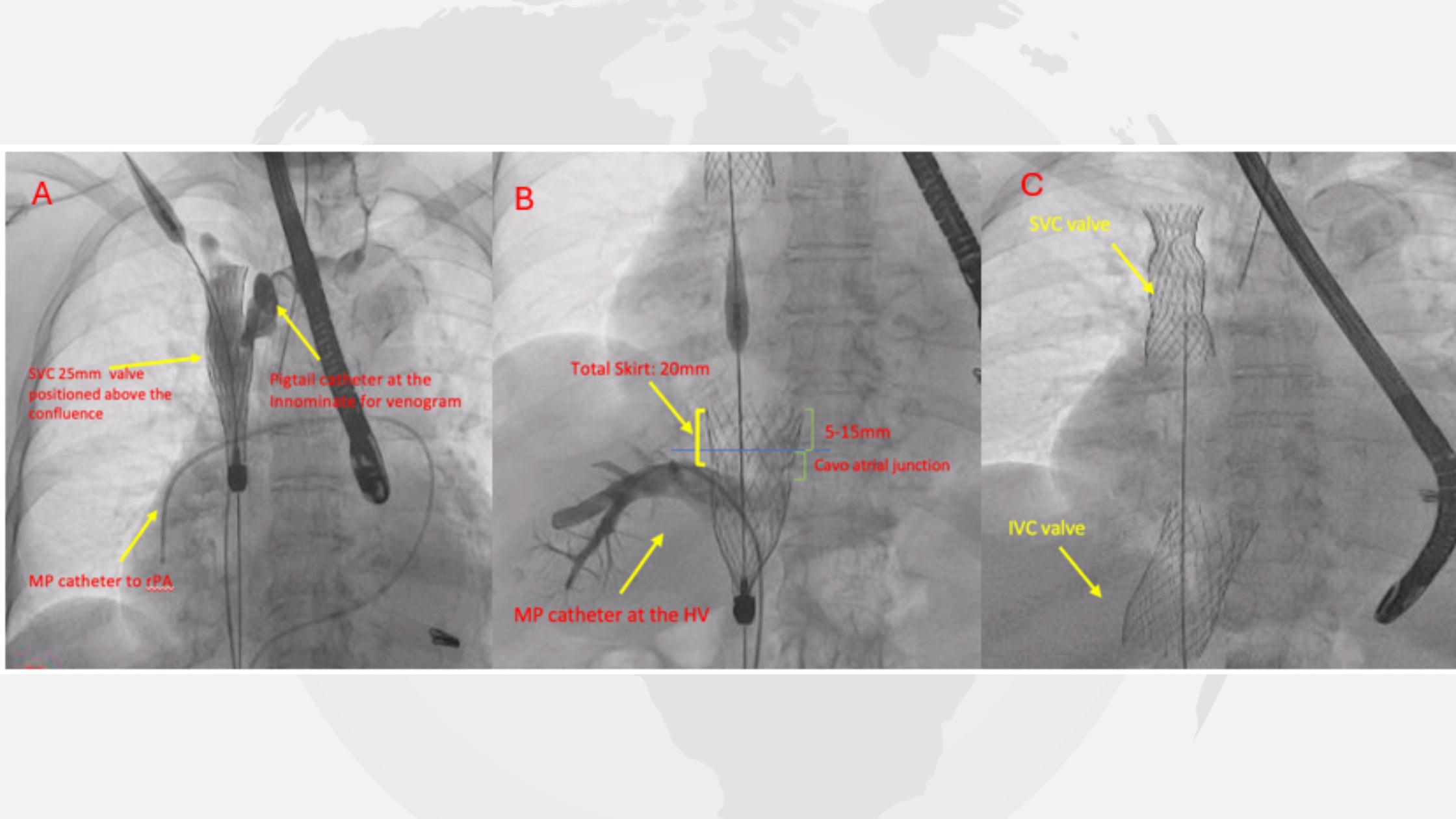
A recent case published in the Philippine Journal of Cardiology documents the country’s first successful implantation of the TricValve® Transcatheter Bicaval Valves System, marking an important advancement in local structural heart therapy. As transcatheter options for tricuspid regurgitation (TR) continue to evolve, the TricValve system has emerged as a promising heterotopic approach for patients with severe symptomatic TR who are not candidates for surgery or orthotopic transcatheter valve replacement.
Case Overview
The patient was an 86-year-old woman with a complex cardiovascular history, including degenerative valvular disease, NYHA Class III–IV heart failure, hypertension, dyslipidemia, chronic atrial fibrillation, and a prior cerebrovascular infarct in 2012. She previously underwent a successful MitraClip (M-TEER) procedure in 2023.
Despite prior therapy, her tricuspid regurgitation progressed, presenting with worsening abdominal bloating, prominent neck vein distention, bilateral pedal edema, and severe hepatic venous congestion. Diagnostic evaluation revealed a coaptation gap of 7 mm, TAPSE of 23 mm, FAC of 41%, sPAP of 55 mmHg, and elevated caval and right atrial v-waves. Risk assessment indicated high surgical risk (STS 7.39%, EuroSCORE 3.86, TRI-Score 4/12) with an NT-proBNP level of 3,297 ng/mL.
Given the severity of symptoms and the patient’s ineligibility for surgery, heterotopic heart valve replacement with CAVI (Caval Valve Implantation) with TricValve was selected. The procedure was successfully performed on 3 April 2024.
Clinical Outcomes

One-Month Follow-Up:
- Preserved LV and RV function
- Reduced RV dimensions
- Improved functional class
- Decreased abdominal and neck vein distention
- Reduced lower-extremity edema
Six-Month Follow-Up:
- RV dimension reduction from 46 mm to 37 mm
- 50% reduction in NT-proBNP from baseline
- Marked improvement in exercise tolerance — the patient regained the ability to climb stairs at home
- Sustained improvement in symptoms and functional capacity
Discussion
For high-risk patients with severe TR, treatment options remain limited. Surgical intervention was deemed unsafe in this case, and orthotopic transcatheter tricuspid valve replacement was not feasible due to anatomical constraints and device availability. T-TEER (TriClip) was also unsuitable given the wide coaptation gap.
The TricValve bicaval system provided a safe and effective heterotopic solution, improving hemodynamics by reducing caval backflow, decreasing RV chamber size, lowering NT-proBNP levels, and restoring functional independence. This case supports CAVI as a valuable option for patients with no viable surgical or orthotopic transcatheter alternatives.
Conclusion
This publication highlights the first successful TricValve case in the Philippines, demonstrating that CAVI with the TricValve system is a viable and effective therapeutic pathway for high-risk patients with severe tricuspid regurgitation. The case reinforces the role of bicaval valve implantation as a meaningful addition to the transcatheter toolbox in regions where orthotopic systems are unavailable or anatomically impractical.
Publication Details
Philippine Journal of Cardiology
Published Online: 29 May 2025
Volume 53, Issue 1
ISSN: 0115-1029 | e-ISSN: 2815-2123
DOI: 10.69944/pjc.adc8da12a3